

What lean body mass actually measures
Lean body mass (LBM) is the fat-free portion of your total body weight: skeletal muscle, bone, organs, connective tissue, blood, and the water sitting inside all of it. It excludes stored (adipose) fat, but it does include a small amount of essential fat inside cell membranes and the nervous system — which is the one technical difference between "lean body mass" and the closely related term "fat-free mass" (usually a 2–3% difference, rarely worth worrying about outside a research lab).
For a typical adult, lean body mass runs 75-86% of total weight for men and 69-79% for women — the rest is fat. Athletes often sit above this range.
Why lean body mass is worth tracking
- The scale can't tell fat loss from muscle loss. Losing 5 lb could mean that much fat gone, or a worrying mix of fat and muscle. Lean body mass separates the two.
- Protein targets are set by lean mass, not total weight. Most modern guidelines put active-adult protein needs at roughly 1.6–2.2 g per kg of lean mass per day — using total body weight instead overshoots for anyone carrying more body fat.
- Some drug dosing uses lean body weight. Certain water-soluble medications are dosed by lean mass rather than total weight, particularly in patients above a typical body-fat range.
The exact formula (if you know your body fat %)
If a DEXA scan, BodPod, or skinfold-caliper reading already gave you a body fat percentage, this is the number to use — it's arithmetic, not an estimate. A 180 lb person at 22% body fat has 180 × (1 − 0.22) = 140.4 lb of lean mass. Don't have a body fat reading yet? The body fat calculator estimates one from a tape measure.
The estimate formulas (if you don't)
Without a body-fat reading, three classic clinical formulas estimate lean mass from just height, weight, and sex — Boer (1984), James (1976), and Hume (1966). Each was built from a different research cohort using a different reference method, so they routinely disagree by 4-11 lb at the same body size.
| Formula | Male | Female |
|---|---|---|
| Boer | 0.407W + 0.267H − 19.2 | 0.252W + 0.473H − 48.3 |
| James | 1.1W − 128(W/H)² | 1.07W − 148(W/H)² |
| Hume | 0.328W + 0.339H − 29.5 | 0.296W + 0.418H − 43.3 |
W = weight in kg, H = height in cm.
Boer is the most common modern clinical reference. James tends to read slightly higher for average male body sizes. Hume, the oldest of the three, tends to read slightly lower against modern DEXA validation. None is "the" correct answer — the spread between them is the honest measure of uncertainty in any formula that only uses height and weight.
Worked example
A 175 lb man who is 5 ft 9 in tall, with no known body fat reading:
- Boer: 0.407 × 79.4 + 0.267 × 175 − 19.2 ≈ 124 lb lean mass.
- James: 1.1 × 79.4 − 128(79.4/175)² ≈ 125 lb lean mass.
- Hume: 0.328 × 79.4 + 0.339 × 175 − 29.5 ≈ 117 lb lean mass.
- Range: 117-125 lb — about 8 lb of spread at the same body size, or roughly 29–33% implied body fat depending on which formula is used.
Enter the same numbers into the lean body mass calculator and it plots all three on one bar against a typical healthy range, alongside a live lean-vs-fat composition split.

Lean body mass in children
Boer, James, and Hume were all derived from adult cohorts and don't transfer to growing children. For ages 14 and younger, the Peters formula estimates lean mass from an estimated extracellular fluid volume instead — a different equation built specifically for pediatric body composition. The lean body mass calculator switches to it automatically when you select "14 or younger."
Common questions
How do I calculate my lean body mass?
If you know your body fat percentage, lean body mass = weight × (1 − body fat %). If you don't, formulas like Boer, James and Hume estimate it from your height, weight and sex alone. The lean body mass calculator does both automatically.
What is a healthy lean body mass percentage?
Roughly 75-86% of total body weight for men and 69-79% for women is a typical healthy range, based on common body-fat-percentage guidelines. Athletes often sit above this range; it varies by age and build.
Which lean body mass formula is most accurate?
No single formula is correct for everyone. Boer (1984) is the most commonly used modern clinical reference. James (1976) tends to read slightly higher for average male body sizes, and Hume (1966) tends to read lower. The three routinely disagree by 4-11 lb at the same body size — the honest measure of uncertainty in any height-and-weight-only estimate.
Is lean body mass the same as fat-free mass?
Almost. Fat-free mass strictly excludes the small amount of essential fat inside cell membranes and the nervous system, which lean body mass formulas include. The difference is usually only 2–3% of body weight and rarely matters outside research settings.
Does lean body mass include water?
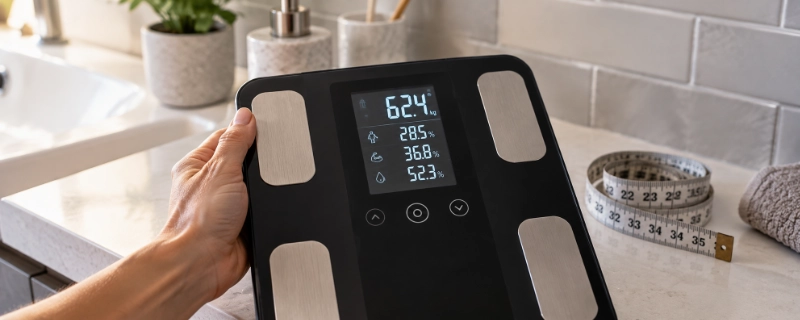
Yes — total body water, roughly 50–60% of adult body weight, sits inside muscle cells, organs, and the space between cells, all of which count as lean tissue. This is why hydration status can shift a bioimpedance-scale reading by a kilogram or two day to day.